
Folie à Deux: When Delusion Becomes Shared

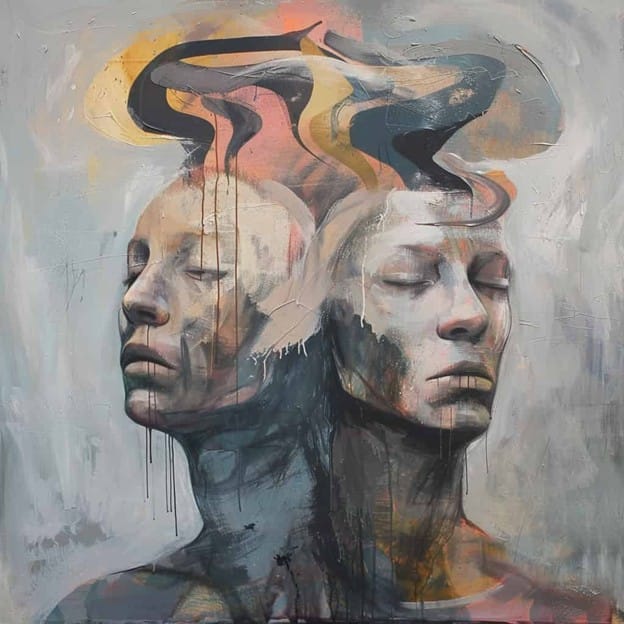
I thought I’d share this little known mental health phenomenon. When a client of mine presented with this psychiatric phenomena, referred to as folie à deux and translated as madness of two. I found it to be very real and even shocking to all concerned. The client in question, around 50 years old, had not exhibited any psychiatric condition previously but all of a sudden had taken on the paranoia and psychotic symptoms of his partner.
In the landscape of psychiatric phenomena, few conditions are as intriguing — and as misunderstood — as folie à deux, a French term meaning “madness of two.” First formally described in the 19th century, this rare psychological occurrence refers to a situation in which a delusional belief is transmitted from one individual to another who is in close emotional proximity to them.
At its core, folie à deux is not simply about influence or empathy. It involves the adoption of a fixed, false belief that mirrors the delusional system of the primary individual, typically someone suffering from a severe psychotic disorder. The secondary person, often a partner, family member, or caregiver, gradually comes to share the same delusion, despite previously having no psychotic symptoms of their own.
Historically, psychiatrists observed that this phenomenon tends to emerge in relationships marked by intense closeness, social isolation, and emotional dependency. The primary individual is usually the more dominant personality, while the secondary person may be more suggestible or reliant. Over time, the shared reality becomes self-reinforcing, especially if the pair exists in a closed social environment with little external challenge to their beliefs.
Modern psychiatry often refers to folie à deux as shared psychotic disorder or induced delusional disorder. Although it is no longer classified as a distinct diagnosis in some contemporary diagnostic manuals, the concept remains clinically relevant. Mental health professionals still recognize that delusional systems can, in rare cases, spread within tightly bonded relationships.
Interestingly, the phenomenon is not limited to two people. Variations such as folie à trois (three individuals) and folie à plusieurs (several individuals) have also been documented, particularly within families or small, insular groups.
From a psychological perspective, folie à deux highlights the powerful role of human connection in shaping perception. Beliefs, even pathological ones, can gain strength through repetition, trust, and emotional bonding. This does not imply weakness on the part of the secondary individual, but rather demonstrates how deeply social our minds truly are.
Treatment typically involves separating the affected individuals and addressing the underlying psychiatric condition of the primary person. In many documented cases, the secondary individual’s delusions diminish significantly once removed from the shared environment and given appropriate psychological support.
Ultimately, folie à deux serves as a compelling reminder that mental health does not exist in isolation. Our thoughts, fears, and beliefs are often shaped within relationships — and, in rare circumstances, even delusion itself can become a shared psychological reality.